-1.png?width=201&height=38&name=Sparton%20Logo%202024%20(10)-1.png)
%20-%201%20Fisher%20Tracks.jpg)
SBR granules are a durable and sustainable material made from recycled rubber. They provide dependable performance for playgrounds, running tracks, artificial turf, and equestrian surfaces while helping reduce landfill waste. Their long service life, competitive cost, and recycled content make them a practical choice for schools, parks, municipalities, contractors, and sports facilities seeking high-quality surfacing materials.
Key Takeaways
- SBR granules are a cost-effective, durable recycled rubber solution for playgrounds, running tracks, artificial turf, and equestrian arenas.
- Recycled SBR supports sustainability by diverting used rubber from landfills and reducing reliance on virgin materials.
- SBR provides reliable impact absorption and outdoor performance, making it suitable for high-traffic recreational and athletic applications.
- SBR vs. EPDM depends on project priorities: SBR is generally more affordable and practical, while EPDM offers greater color and UV-stability options.
- Proper installation and material selection are essential for achieving the desired safety, performance, and lifespan of SBR surfacing.
- Experienced suppliers can help determine the right quantity and application based on project specifications, budget, and performance requirements.
When you choose SBR granules for your project, you choose a material that delivers lasting performance while supporting responsible recycling. Made from recycled rubber granules, SBR gives discarded rubber a new purpose in playgrounds, running tracks, artificial turf systems, and equestrian arenas.
Many schools, parks, municipalities, and sports facilities choose SBR rubber granules as they offer dependable impact absorption, durability, and value. The material performs well in demanding outdoor environments while helping reduce rubber waste.
The sustainability of recycled SBR rubber goes beyond recycled content. Its long service life, practical performance, and contribution to a circular economy make it a smart choice for projects that balance budget, durability, and environmental responsibility. Whether you are building a new facility or upgrading an existing surface, SBR rubber provides a practical solution that supports long-term performance.
What Are SBR Granules and Where Do They Come from?
SBR stands for Styrene Butadiene Rubber. SBR granules are produced by recycling used rubber products, including tires and industrial rubber materials. Instead of sending these materials to landfills, recycling facilities process them into granules that serve a wide range of surfacing applications.
The recycling process follows several steps:
- Collection of post-consumer and post-industrial rubber
- Shredding the rubber into smaller pieces
- Removing steel and fiber materials
- Grinding the rubber into uniform granules
- Screening the material for consistent size and quality
This process gives discarded rubber a second life. In the US, the tire recycling rate has increased from 11% in 1990 to 79% in 2023. Most tires contain SBR rubber, which can then go into making new surfacing materials for public and commercial projects.
Why SBR Granules Outperform for Cost and Durability
Most public and private projects require a surfacing solution that performs well without exceeding the available budget. But that's not the only benefit of SBR rubber.
Excellent Impact Absorption
SBR rubber helps absorb impact in playgrounds and athletic facilities. Properly installed systems help meet industry safety requirements for fall protection and athletic performance.
Reliable Outdoor Performance
Outdoor surfaces face rain, snow, heat, and freezing temperatures throughout the year. SBR rubber granules remain resilient through changing weather conditions and heavy daily use.
Cost-Effective Material
Compared with premium surfacing materials, SBR granules are cost-effective while delivering dependable performance. Lower project costs allow you to invest more in equipment, site improvements, or additional recreational features.
Long Service Life
A properly installed surface made with recycled SBR rubber can provide years of reliable performance with minimal routine maintenance, making it a practical investment for high-traffic facilities.
SBR Granules Across Playgrounds, Tracks, Turf, and Equestrian Surfaces
One reason SBR rubber applications continue to grow is the material's versatility. It performs well in many types of recreational and athletic environments.
Playgrounds
SBR granules provide cushioning that helps reduce impact from falls on playgrounds. They also improve slip resistance and reduce noise while creating a comfortable walking surface. Surface depth depends on the required fall height and project specifications.
Running Tracks
Using SBR granules for running tracks helps improve shock absorption, traction, and athlete comfort. They commonly serve as a base layer beneath colored wear surfaces or become part of track system designs specified by project engineers.
Artificial Turf
Synthetic sports fields use SBR rubber granules as infill or base materials, depending on the field design. The material supports turf fibers while improving surface stability and player comfort.
Equestrian Facilities
Many riding arenas combine SBR rubber with sand to create a surface that cushions hoof impact while improving footing consistency. The result helps create a more comfortable riding experience for horses and riders during training and competition.
Quick Tip: Choose SBR for cost-effective, high-traffic applications where durability and recycled content are priorities.
The Environmental Case for Choosing Recycled SBR Rubber Over Virgin Materials
Sustainability starts with material selection. Choosing recycled SBR rubber gives potential waste a valuable second life while reducing demand for new raw materials.
Diverts Rubber from Landfills
Millions of tires reach the end of their service life each year. Recycling them into recycled rubber granules reduces landfill waste while creating useful products for recreation and sports facilities.
Reduces Demand for Virgin Rubber
Long-lasting materials reduce replacement frequency. Since SBR granules provide years of dependable performance, facilities generate less material waste over time.
Supports Long-Term Performance
Many municipalities, schools, and public agencies include recycled content in purchasing decisions. Choosing sustainable rubber surfacing can support those environmental objectives while delivering dependable performance.
SBR vs. EPDM Granules: Which Material Fits Your Project?
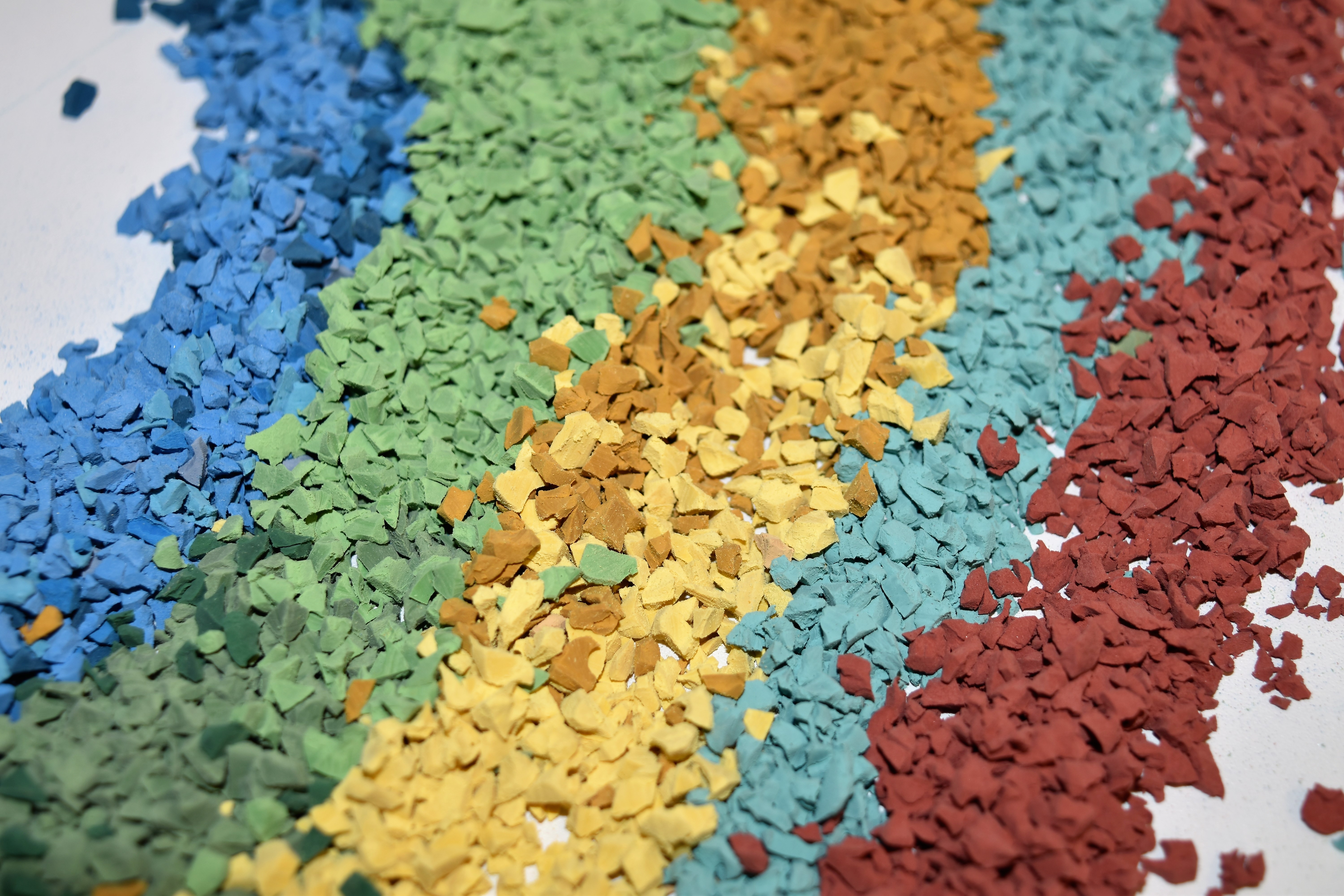
Many buyers compare SBR vs EPDM granules before selecting a surfacing system. Both materials perform well, but each serves different project priorities.
|
Feature |
SBR Granules |
EPDM Granules |
|
Cost |
Lower |
Higher |
|
Recycled Content |
High |
Typically lower |
|
Color Options |
Black |
Wide range of colors |
|
UV Stability |
Good |
Excellent |
|
Typical Applications |
Base layers, playgrounds, tracks, turf, equestrian arenas |
Decorative top layers, premium playgrounds |
|
Best For |
Budget-conscious, high-traffic projects |
Projects requiring bright colors and design flexibility |
Many playground systems combine both materials. SBR rubber granules create the base layer for durability and value, while EPDM forms the colored top layer for appearance and UV color stability. The best material depends on your project goals, budget, appearance requirements, and performance expectations.
Buying Tip: Compare cost, application, required depth, UV exposure, appearance, and expected traffic before selecting SBR or EPDM.
Frequently Asked Questions About SBR Granules
Are SBR granules safe for playgrounds?
Yes, SBR granules are used for playgrounds as poured-in-place and loose-fill surfacing systems. When installed at the correct depth within a tested system, they help provide impact attenuation that supports playground safety standards.
How much SBR rubber granules do I need for my project?
The required quantity depends on your project size, surface depth, and application. Playgrounds, running tracks, turf fields, and equestrian arenas all have different material specifications. Your supplier can calculate the appropriate volume based on your project plans.
What is the typical lifespan of SBR surfacing?
The lifespan depends on installation quality, usage, maintenance, and climate. Many SBR rubber systems provide reliable performance for 10 to 15 years before major replacement becomes necessary.
Can SBR granules be recycled after use?
Yes, in many applications, used SBR rubber granules can be collected and processed into new rubber products, extending the material's life through additional recycling.
How do I choose a reliable recycled rubber supplier near me?
Look for a supplier with proven industry experience, consistent product quality, dependable inventory, and technical support. Sparton Enterprises has more than 50 years of experience supplying premium rubber products for playgrounds, athletic facilities, and equestrian surfaces across the US.
Choose SBR Granules for Lasting Performance and Sustainability
When you choose recycled SBR rubber, you invest in a surface that performs well, supports sustainability goals, and fits a wide range of project budgets. Working with an experienced supplier, like Sparton Enterprises, helps you choose the right material for your application and project specifications.
Whether you are planning a new playground, athletic facility, artificial turf installation, or equestrian arena, Sparton Enterprises supplies premium SBR rubber granules backed by more than 50 years of industry experience.
Request a quote to review your technical specifications and check bulk material availability for your next project.

.jpg)
.jpg)